
Cold air entering beneath a door can make an otherwise comfortable room feel harder to settle into. The good news is that you can usually narrow down the cause and choose a practical fix without turning it into a major home project.
Quick answer: measure the door gap, check whether the door opens over a hard floor or carpet, then choose a solution that can move freely with the door. A flexible double-sided draft stopper is a useful option when you want a removable, trim-to-fit barrier without drilling.
1. Find where the cold air is entering
Start by checking the full edge of the door rather than assuming the gap is only at the bottom. On a cool or windy day, slowly move your hand around the frame and threshold. Look for visible daylight, worn weatherstripping or a section where the door no longer closes evenly.
If the draft is mainly beneath the door, a bottom barrier may help. If air enters around the top or sides, replace or adjust the frame weatherstripping first. A door stopper cannot correct a damaged frame, a loose threshold or a door that no longer closes properly.
2. Measure before choosing a solution
Measure the width and thickness of the door as well as the height of the gap. Check the floor on both sides. Thick carpet needs more clearance than tile, vinyl or wood, and the door must still open and close without catching.
- Door width: measure from one edge to the other.
- Door thickness: check that a wraparound or double-sided design can fit.
- Gap height: make sure the barrier can cover the opening without jamming.
- Floor surface: test for friction before making any permanent change.
3. Compare the common ways to block a door draft
Rolled towel or fabric draft snake
This is the fastest temporary test. It can show whether blocking the gap makes the room feel more comfortable, but it normally needs to be repositioned after the door opens.
Adhesive weatherstripping
Adhesive strips can work around a door frame when the surface is clean and the gap is consistent. Check the adhesive and material regularly, especially where moisture or temperature changes are common.
Door sweep
A fixed sweep can create a neat result, but some versions require screws or careful alignment. It may be better suited to a door where you can make permanent changes.
Flexible double-sided draft stopper
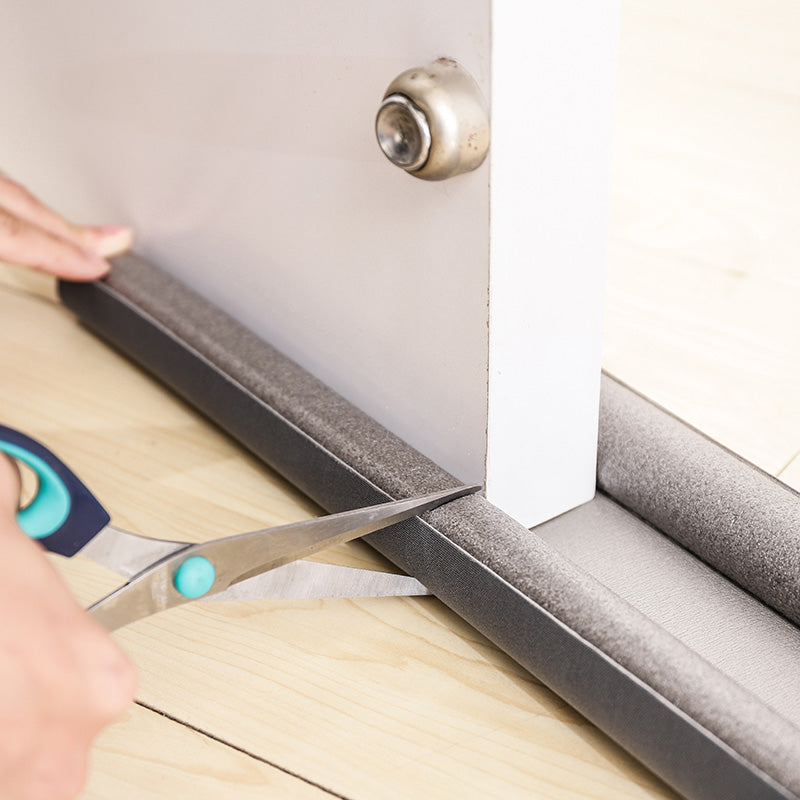
This style places cushioning on both sides of the door and moves with it. It can be trimmed for a better fit and does not require drilling. It is a practical choice for bedrooms, home offices and interior entry areas where the floor has enough clearance.
See the Flexible Door Draft Stopper at Fig Bees →
4. Fit a flexible door draft stopper
- Clean the floor and the lower part of the door.
- Measure the door width and compare it with the product dimensions.
- Trim only as directed, taking off a small amount at a time.
- Slide the stopper beneath the door and centre the cushioning on both sides.
- Open and close the door slowly to confirm that it moves freely.
- Recheck the fit after a day of normal use.
Do not force the door if the stopper catches. Remove it, remeasure and adjust the fit. Results vary with the size of the gap, the floor surface and the condition of the door.
5. Choose the right rooms first
Begin with the door that creates the clearest problem. A bedroom door may benefit from reduced hallway light and dust. A home office may feel more settled when the gap is covered. An entry-area door may need a more durable fixed solution if it is exposed to water or heavy outdoor use.
For more practical household finds, browse the Fig Bees Home Care collection.
6. Know when a door stopper is not enough
Contact a qualified local professional when the door is difficult to latch, the frame is visibly damaged, water enters around it, or the threshold is loose. These signs point to a repair rather than a simple draft barrier. Renters should also check their lease before installing adhesive or fixed hardware.
Frequently asked questions
Will a draft stopper work on carpet?
It depends on the carpet height and available clearance. Low-pile carpet may work, while thicker carpet can create too much friction. Test that the door opens freely before regular use.
Does it require drilling?
The flexible double-sided model featured here does not require drilling. It slides beneath the door and can be removed when needed.
Can I trim it to fit?
Yes, it is designed to be trimmed. Measure carefully and follow the product instructions so you do not remove too much material.
How long is delivery to Canada?
Allow an estimated 1–3 business days for processing plus 7–15 business days in transit to Canada (8–18 business days total). These estimates are not guaranteed. Free delivery is available to eligible Canadian addresses, and tracking is provided when available.
Can it reduce noise?
Covering a gap may soften some everyday room-to-room sound, but this product is not soundproofing and results depend on the door and the surrounding structure.
Ready to cover the gap? View colours and pack options for the Flexible Door Draft Stopper. Fig Bees offers free delivery to eligible Canadian addresses. Allow an estimated 8–18 business days in total, including processing. Tracking is provided when available; customs, carrier delays and remote destinations can add time.